LOSE WEIGHT WITH MEDICAL SUPPORT — BUILT FOR MEN
- Your personalised programme is built around medical care, not willpower.
- No generic diets. No guesswork.
- Just science-backed results and expert support.
Find out if you’re eligible




Does tirzepatide cause spotting? This question concerns patients prescribed this dual GIP/GLP-1 receptor agonist for type 2 diabetes or weight management. Tirzepatide (Mounjaro, Zepbound) is not associated with vaginal spotting or abnormal uterine bleeding in FDA-approved prescribing information or clinical trial data. However, patients may experience spotting due to other factors, including weight loss-induced hormonal changes, contraceptive interactions, or underlying gynecological conditions. Understanding the medication's actual side effect profile and when to seek medical evaluation for unexpected bleeding is essential for safe, effective treatment.
Quick Answer: Tirzepatide does not cause vaginal spotting according to FDA prescribing information and clinical trial data.
We offer compounded medications and Zepbound®. Compounded medications are prepared by licensed pharmacies and are not FDA-approved. References to Wegovy®, Ozempic®, Rybelsus®, Mounjaro®, or Saxenda®, or other GLP-1 brands, are informational only. Compounded and FDA-approved medications are not interchangeable.
LOSE WEIGHT WITH MEDICAL SUPPORT — BUILT FOR MEN
Find out if you’re eligible

Tirzepatide is a dual glucose-dependent insulinotropic polypeptide (GIP) and glucagon-like peptide-1 (GLP-1) receptor agonist approved by the FDA for the treatment of type 2 diabetes mellitus under the brand name Mounjaro and for chronic weight management as Zepbound. This medication works by targeting two incretin hormone receptors involved in metabolic regulation.
The mechanism of action involves simultaneous activation of both GIP and GLP-1 receptors, which are naturally produced in the gastrointestinal tract. By stimulating these receptors, tirzepatide enhances glucose-dependent insulin secretion from pancreatic beta cells, suppresses inappropriately elevated glucagon secretion, and slows gastric emptying. These combined effects improve postprandial glucose excursions and reduce overall glycemic variability. Additionally, tirzepatide acts on central appetite regulation pathways in the hypothalamus, promoting satiety and reducing caloric intake, which contributes to its weight loss effects.
Tirzepatide is administered as a once-weekly subcutaneous injection, with dosing typically initiated at 2.5 mg and gradually titrated upward to minimize gastrointestinal side effects. The maximum approved dose is 15 mg weekly for both diabetes management and weight management. The medication's prolonged half-life of approximately five days allows for weekly dosing while maintaining therapeutic drug levels. Clinical trials have demonstrated hemoglobin A1c reductions of approximately 2% in diabetes patients, with weight loss ranging from 7-11% in diabetes trials (SURPASS) and 15-21% in obesity trials (SURMOUNT), depending on the dose administered and patient population.
The most frequently reported adverse effects of tirzepatide in pivotal clinical trials were predominantly gastrointestinal in nature, consistent with the drug class mechanism of delayed gastric emptying. In the SURPASS clinical trial program, which enrolled over 6,000 participants with type 2 diabetes, the most common side effects included nausea (reported in 12% to 29% of patients), diarrhea (13% to 16%), vomiting (5% to 10%), constipation (6% to 7%), and abdominal discomfort. These gastrointestinal symptoms were generally mild to moderate in severity and tended to diminish over time as patients developed tolerance to the medication.
There is no established link between tirzepatide and vaginal spotting or abnormal uterine bleeding in the FDA-approved prescribing information or published clinical trial data. Gynecological adverse events, including menstrual irregularities or intermenstrual bleeding, were not identified as significant safety signals during the comprehensive phase 3 development program. The medication does not have direct hormonal effects on the reproductive system, and its mechanism of action does not involve modulation of estrogen, progesterone, or other sex hormones.
Other notable adverse effects observed in clinical trials included decreased appetite (5% to 9%), injection site reactions (approximately 2% to 4%), and fatigue (3% to 5%). Hypoglycemia rates were low when tirzepatide was used as monotherapy or with metformin but increased when combined with sulfonylureas or insulin. Pancreatitis occurred at a rate of 0.2-0.6 per 100 patient-years. The FDA prescribing information includes a boxed warning for risk of thyroid C-cell tumors and contraindication in patients with personal or family history of medullary thyroid carcinoma (MTC) or Multiple Endocrine Neoplasia syndrome type 2 (MEN2). Additional risks include gallbladder disease and acute kidney injury in the setting of severe gastrointestinal adverse events.
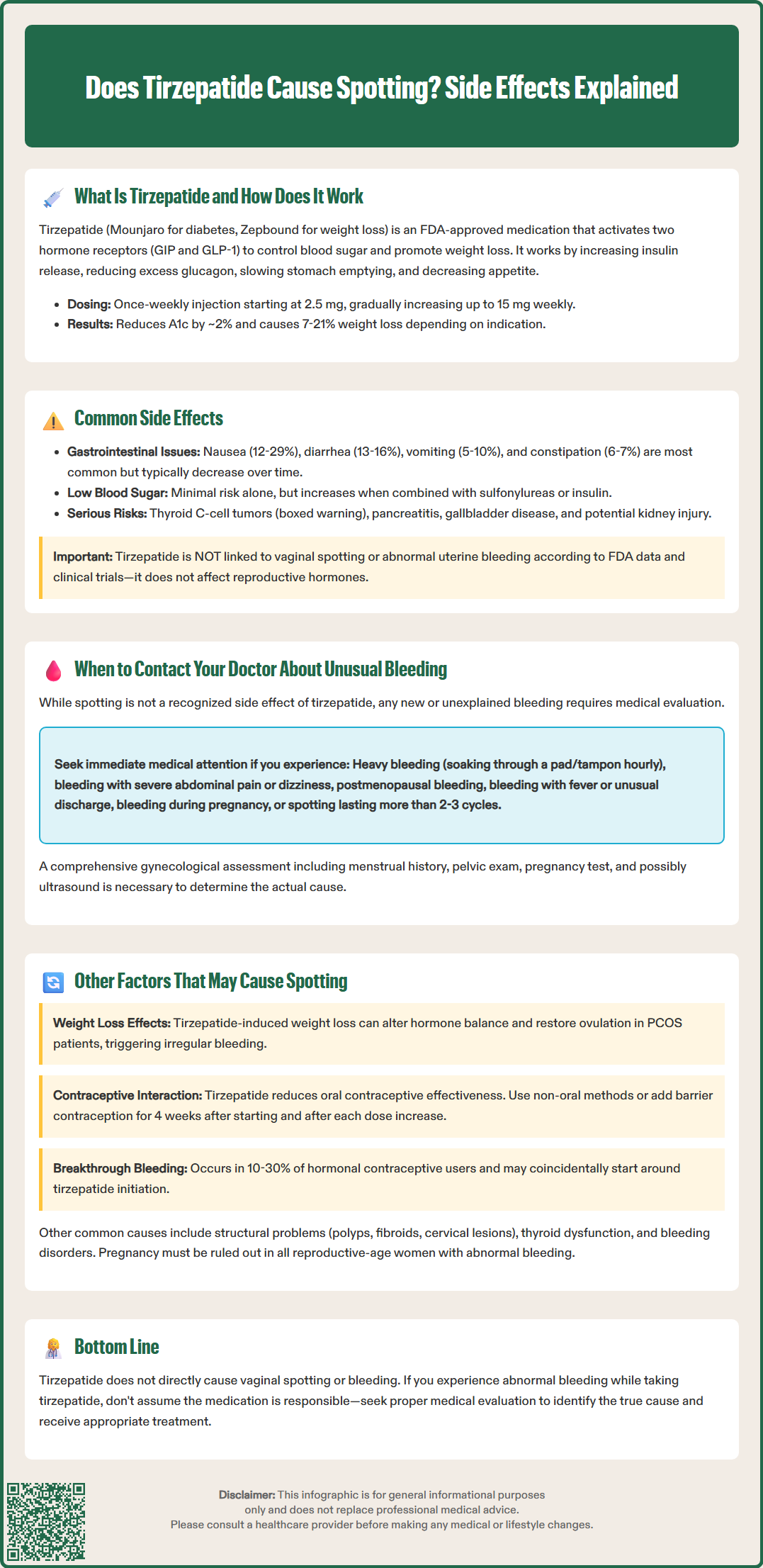
While spotting or abnormal vaginal bleeding is not a recognized side effect of tirzepatide, any new or unexplained bleeding warrants medical evaluation to identify the underlying cause. Patients should contact their healthcare provider promptly if they experience intermenstrual bleeding, postcoital bleeding, or any change in their normal menstrual pattern that persists beyond one cycle. Immediate medical attention is necessary for heavy bleeding that soaks through a pad or tampon every hour for several consecutive hours, bleeding accompanied by severe abdominal or pelvic pain, or bleeding associated with dizziness, lightheadedness, or signs of hemodynamic instability (heart rate >100, systolic blood pressure <90 mmHg, syncope).
Key warning signs requiring urgent evaluation include:
Postmenopausal bleeding (any vaginal bleeding occurring more than 12 months after the last menstrual period)
Bleeding accompanied by fever, unusual vaginal discharge, or pelvic pain suggesting infection
Bleeding associated with pregnancy or suspected pregnancy
Recurrent spotting that persists for more than two to three menstrual cycles
Patients taking tirzepatide who develop abnormal bleeding should undergo a comprehensive gynecological assessment, including detailed menstrual history, pelvic examination, and pregnancy testing for all reproductive-age women regardless of contraceptive use. Additional diagnostic testing such as transvaginal ultrasound, endometrial sampling (particularly for women ≥45 years or younger women with risk factors like obesity or PCOS), or cervical cytology may be indicated based on clinical presentation. It is essential to document the temporal relationship between medication initiation and symptom onset, though causality should not be assumed without thorough investigation. Healthcare providers should maintain a broad differential diagnosis and consider common causes of abnormal uterine bleeding.
When patients taking tirzepatide report vaginal spotting, clinicians should systematically evaluate alternative explanations, as the medication itself is not known to cause gynecological bleeding. Weight loss, which is a primary therapeutic effect of tirzepatide, can significantly impact reproductive hormone balance and menstrual patterns. Substantial weight reduction alters adipose tissue-derived estrogen production, affects leptin signaling, and can restore ovulatory function in women with polycystic ovary syndrome (PCOS). These hormonal shifts may manifest as irregular bleeding, breakthrough spotting, or changes in menstrual cycle length and flow during the weight loss phase.
Hormonal contraceptive use represents another common cause of intermenstrual bleeding that may coincide temporally with tirzepatide initiation. Breakthrough bleeding occurs in 10% to 30% of women using combined oral contraceptives, particularly during the first three months of use or when doses are missed. Progestin-only methods, including the levonorgestrel intrauterine system, implants, and minipills, frequently cause unpredictable bleeding patterns. Important: Tirzepatide can reduce the exposure to oral contraceptives due to delayed gastric emptying. The FDA prescribing information recommends using a non-oral contraceptive method or adding a barrier method for 4 weeks after tirzepatide initiation and for 4 weeks after each dose increase.
Additional considerations include structural gynecological pathology such as endometrial polyps, uterine fibroids, adenomyosis, or cervical lesions, which are common in reproductive-age women and may be incidentally discovered during evaluation. Thyroid dysfunction, which can coexist with metabolic disorders, affects menstrual regularity and should be assessed through thyroid-stimulating hormone measurement. Coagulation disorders, including von Willebrand disease and platelet dysfunction, may present with menorrhagia or intermenstrual bleeding. Finally, pregnancy and pregnancy-related complications, including implantation bleeding, threatened miscarriage, or ectopic pregnancy, must be excluded in any woman of reproductive age presenting with abnormal vaginal bleeding, regardless of contraceptive use or perceived pregnancy risk.
Tirzepatide does not directly affect menstrual cycles, but the significant weight loss it produces can alter reproductive hormone balance, potentially causing irregular bleeding or changes in cycle patterns, especially in women with PCOS.
Yes, tirzepatide delays gastric emptying and can reduce oral contraceptive exposure. The FDA recommends using non-oral contraception or adding a barrier method for 4 weeks after starting tirzepatide and after each dose increase.
Contact your healthcare provider for any new intermenstrual bleeding, postmenopausal bleeding, heavy bleeding soaking through pads hourly, bleeding with severe pain or dizziness, or spotting that persists beyond two to three cycles.
All medical content on this blog is created using reputable, evidence-based sources and is regularly reviewed for accuracy and relevance. While we strive to keep our content current with the latest research and clinical guidelines, it is intended for general informational purposes only.
This content is not a substitute for professional medical advice, diagnosis, or treatment. Always consult a licensed healthcare provider with any medical questions or concerns. Use of this information is at your own risk, and we are not liable for any outcomes resulting from its use.